
The High Atlas Mountains in Morocco are emerging from over a decade of severe drought with what looks like hundreds if not thousands of acres of olive trees that will never bloom again. Although the rains have returned this year, biodiversity has taken a huge hit. But there are some hopeful signs that these losses may be turning around with the help of some dedicated organizations and creative individuals that I recently spent time with.
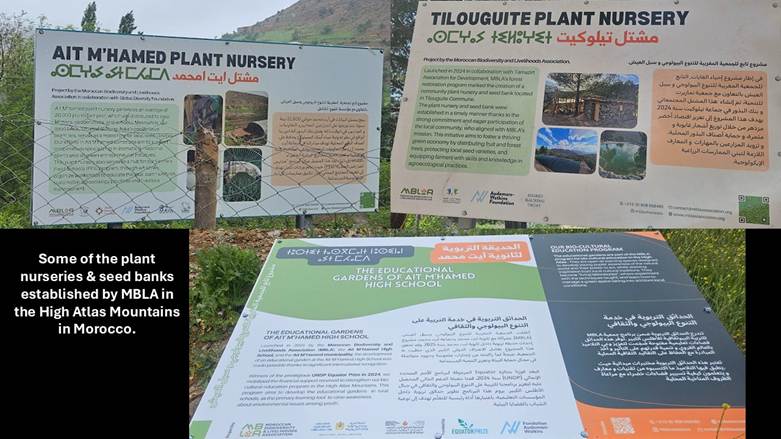
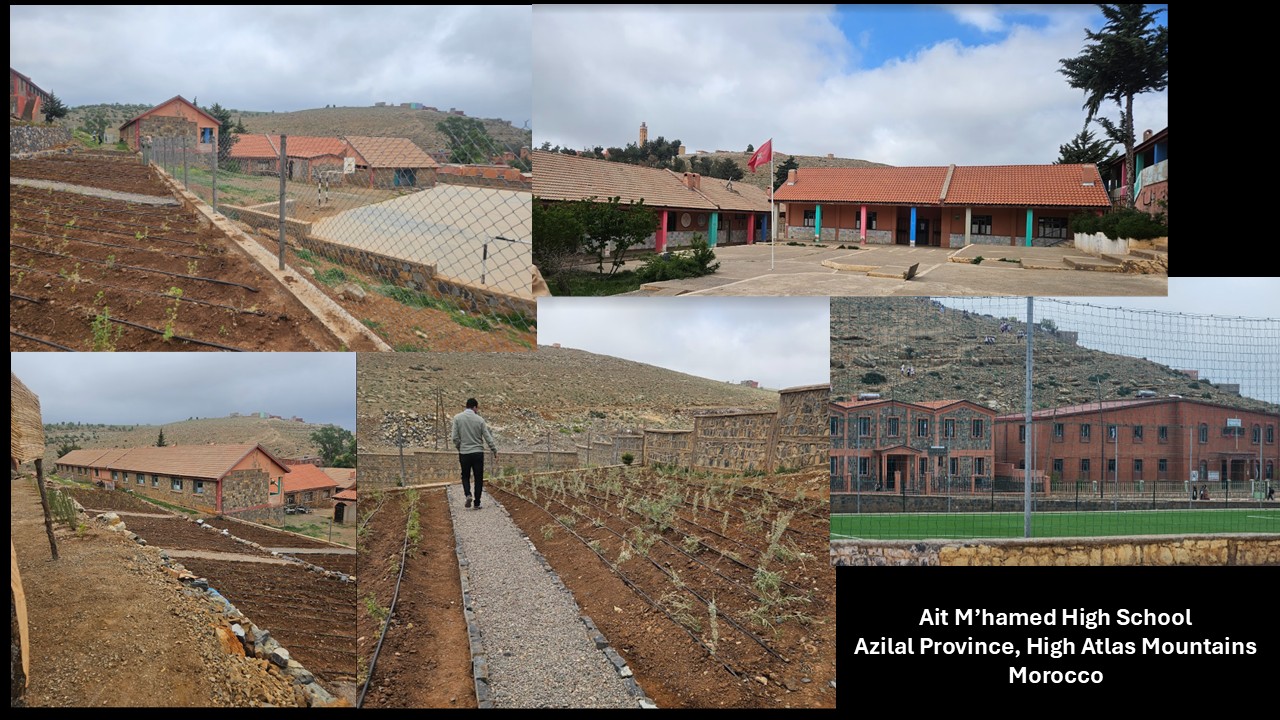
The Moroccan Biodiversity and Livelihoods Association (MBLA) has been working for more than a decade to revitalize local economies in the High Atlas and boost biodiversity by way of creating a network of plant nurseries and seed banks filled with native and endemic medicinal plants and trees. They are now giving away 40,000 plants each year to locals that have received free education on the how, where and why of planting trees and Medicinals. One of the nurseries is at Ait M’hamed High School where students learn about the importance of biodiversity and help plant and maintain the nursery and gardens. The students entered and won the 2024 Equator Prize, a prestigious competition run by the UN that is focused on poverty reduction, conservation and the promotion of biodiversity. The prize money was used to establish a botanical garden at the school, no small feat given the challenging soils found on the campus.
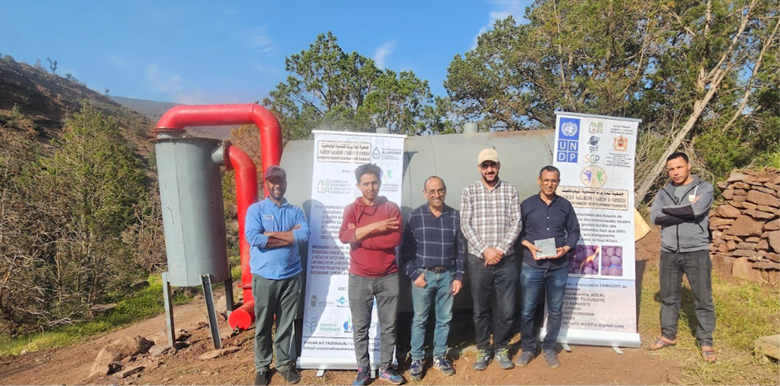
Recently MBLA, with assistance from folks at the University of Cadi Ayyad, (UCA) introduced pyrolysis and biochar into the project in an effort to boost germination and survivability of the plants donated to the community. We visited two of the units that will be used to produce biochar from locally available biomass, such as olive tree prunings and walnut shells. A low cost ($10K) retort kiln owned by the local community uses ~40kgs of wood to jumpstart the pyrolysis process after which sufficient syngas is produced to turn it into a self-sustaining or autothermal process. In addition to biochar, this relatively low tech machine also produces wood vinegar which will be used to replace synthetic agricultural inputs such as pesticides. UCA is working with the community to determine ideal temperatures and run times for different feedstocks and end uses.
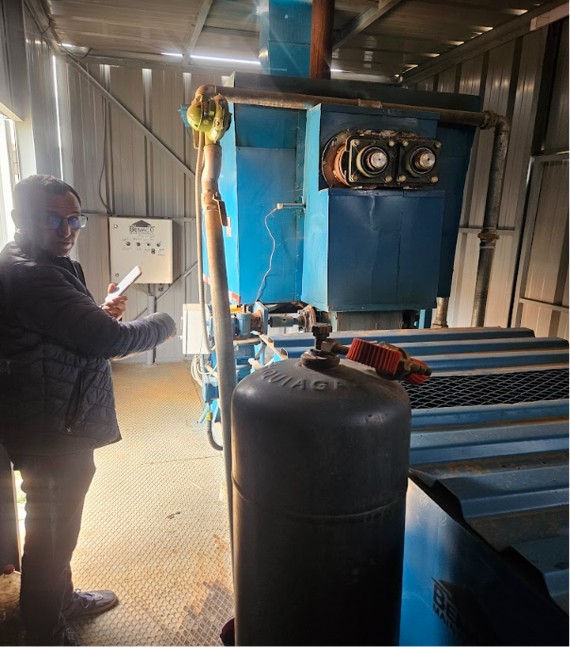
We visited a second kiln located at a women’s cooperative that has switched from making carpets due to low demand, to producing high end cosmetic products, essential oils and traditional teas from many of the plants gifted to them by the project. The excess heat from this continuous kiln will be used to dry herbs and the biochar will be used to enhance plant growth. This kiln was manufactured in Morocco (~$40K) and can process up to 50 kg of biomass per hour and produces wood vinegar as well. I mention that biochar has been used in a wide range of beauty products but in all honesty in a country like Morocco using it in soils that have been degraded from drought and erosion would seem to be a higher priority.
What impressed me even more than these earnest afforestation efforts is their ambition to create a biochar research center of excellence at UCA. This is no mean feat as it requires a minimum of 45 professors and 30 PhD students to be working on a particular topic for a center to be granted. They already have that and more! Creating this kind of critical mass in Africa could be pivotal in training future scientists, lab technicians, credit certifiers, engineers, architects amd more on the many ways biochar can help nations to decarbonize while simultaneously adapting to our current climate.
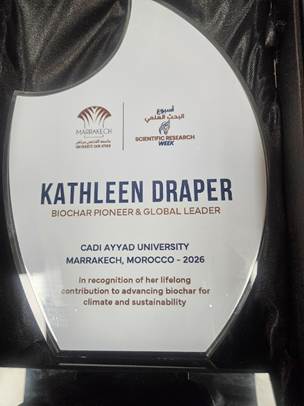
Bravo and shukran شكرًا لك for the award and for hosting me! I hope to return in the not too distant future!
For more information on the project, check out these videos:
Moroccan Biodiversity and Livelihoods Association (Morocco) – Equator Prize 2024 Winner
